
My mother-in -law bought me a Hello Birdie bird bath from Limitless Innovations. A supposedly “smart” bird feeder bath (bird feeder available, too) that uses a wireless HD camera that uses AI to detect species of birds that come to the bath. The camera is solar powered via a small solar panel and a rechargeable battery. It records snapshots, audio and video snippets to the cloud that you can retrieve via an app. Of course, there’s a subscription fee for it to work.
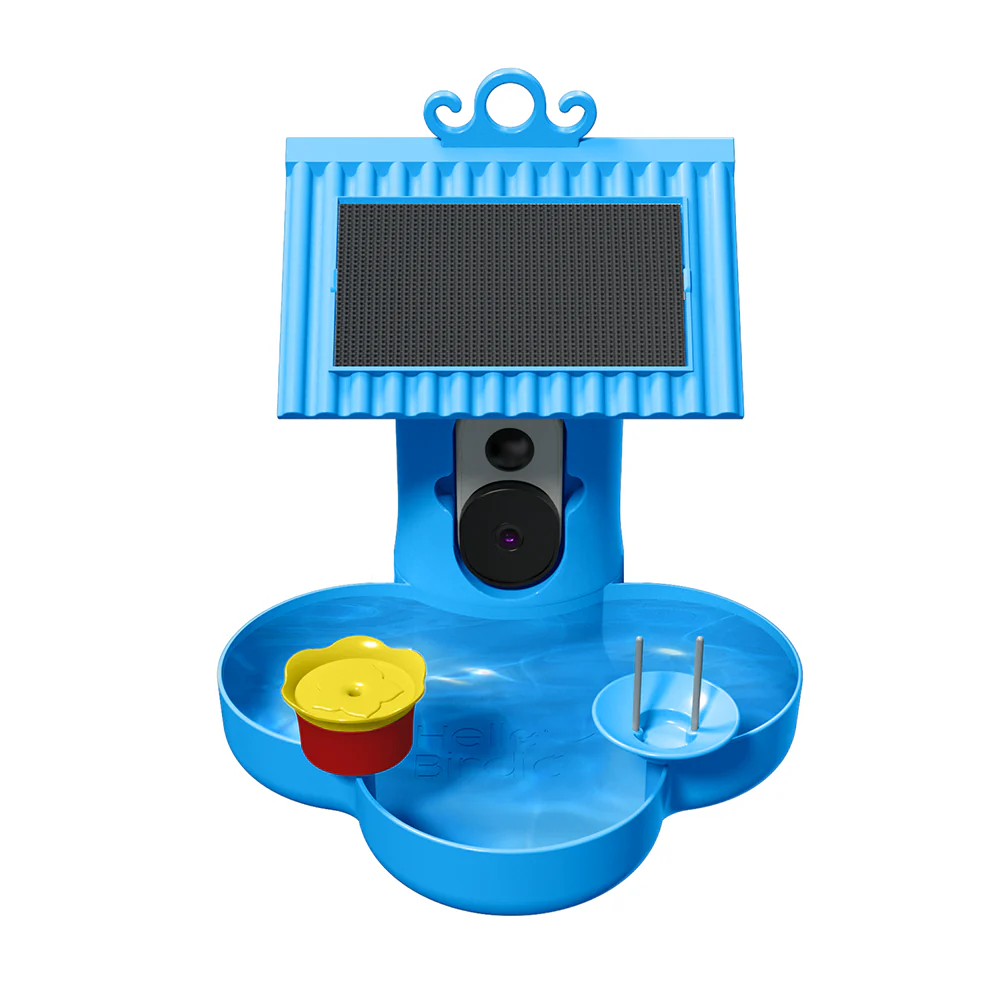
It can also be used “standalone” by using a micro SD card to record detections and associated media, but having to go out to the feeder, remove the camera, remove the USB charging adapter, remove the SD card, etc. is not convenient. Gotta make it so people will pay for the service!
In any case, this thing seemed a bit sketchy to me, so before it goes on my network for more than just some testing, I wanted to know more about what and where it was talking to, so I started looking into it.
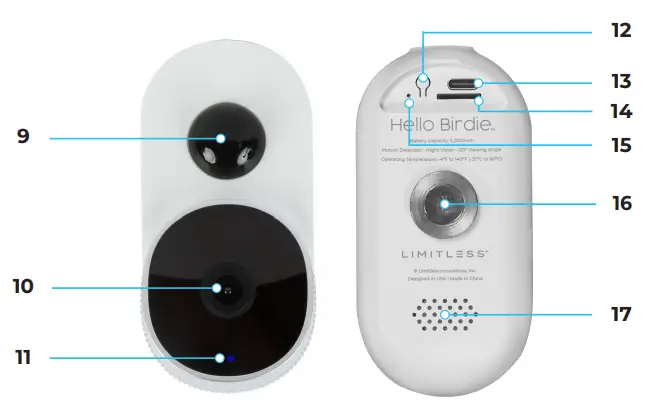
The camera housing itself seems pretty well built (it is IP65 rated). Its a clamshell design, secured by a single screw that under a rubber flap. It took me a while to figure out how to break it open with out actually breaking it, because of a tight gasket between the halves of the shell. One interesting thing to note is that there is no FCC markings on the exterior of the housing (actually none anywhere, is this thing legal?).
Here it is opened up:
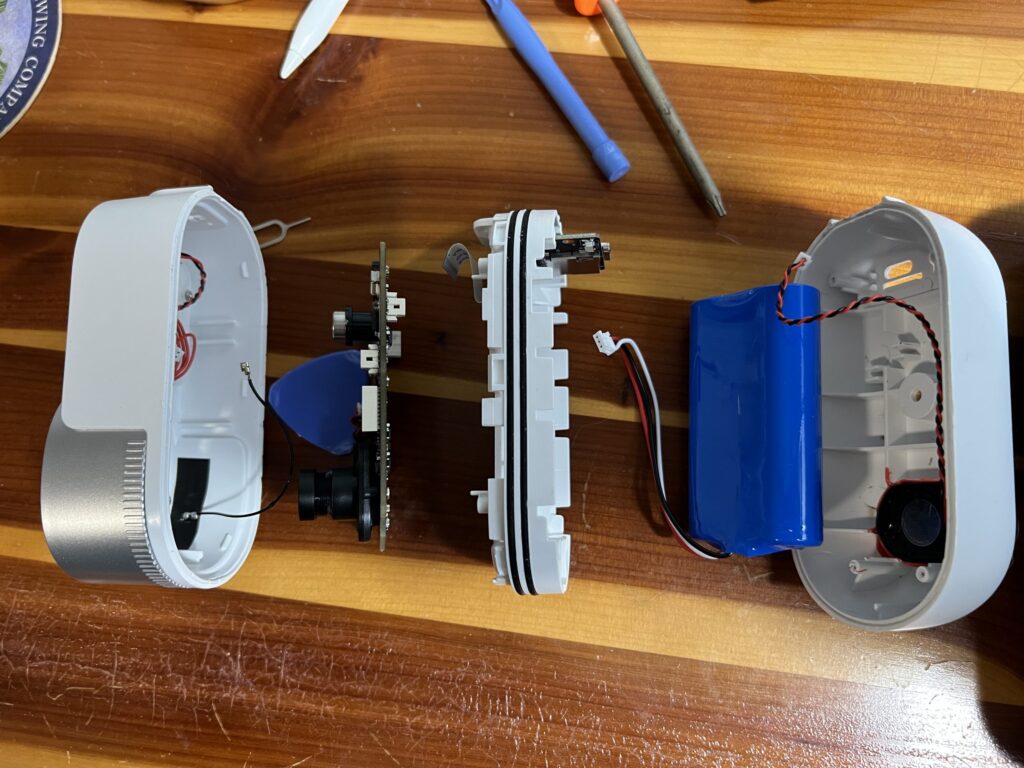
The front housing has an infrared LED board, microphone and a stick on antenna for the WiFi (802.11 b/g/n 2.4GHz)
The main and only circuit board, other than a small support board for power, SD slot.
The interior center housing holds a small interface board for the micro SD card slot, USB-C connector (power only), a reset button, and a wake up button. Going around the circumference of the housing are two rubber o-ring gaskets to keep the water out. These were quite snug between the housings, to the point I thought maybe this thing was glued together.
The battery, supposedly 5.200 mAHr, but there’s no obvious markings on the battery itself.
And finally the rear housing which has a small speaker used during camera setup, and some cutouts to access the SD card slot, USB connector, and the buttons.
The main circuit board
Here are front and back pics of the circuit board:
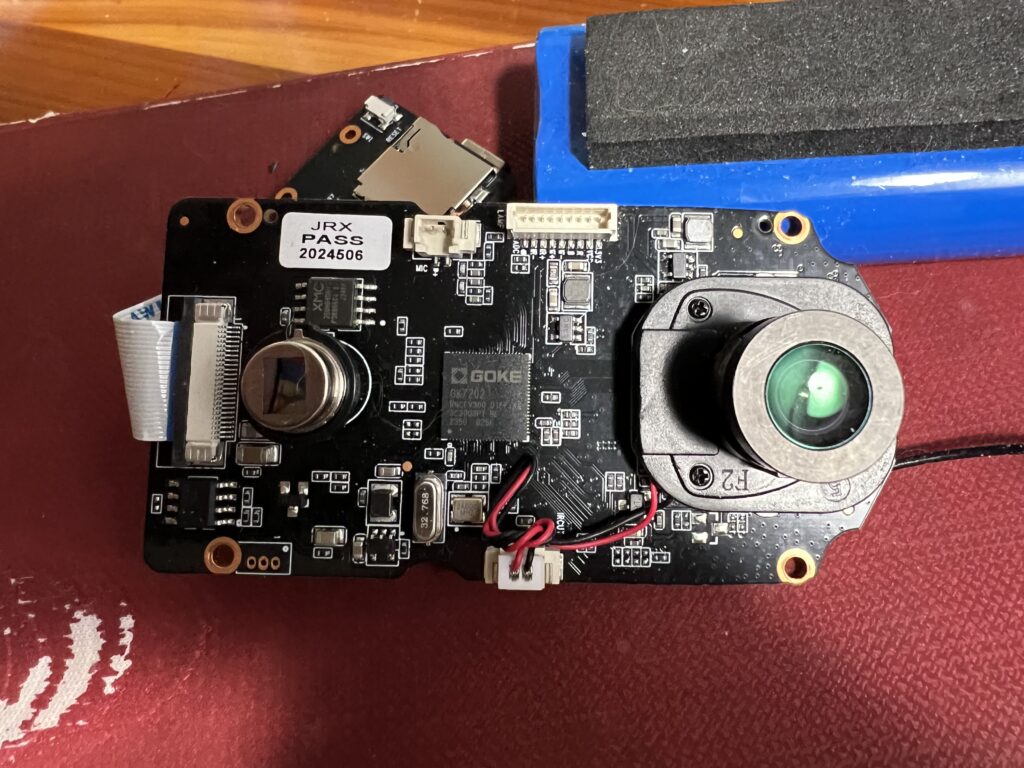
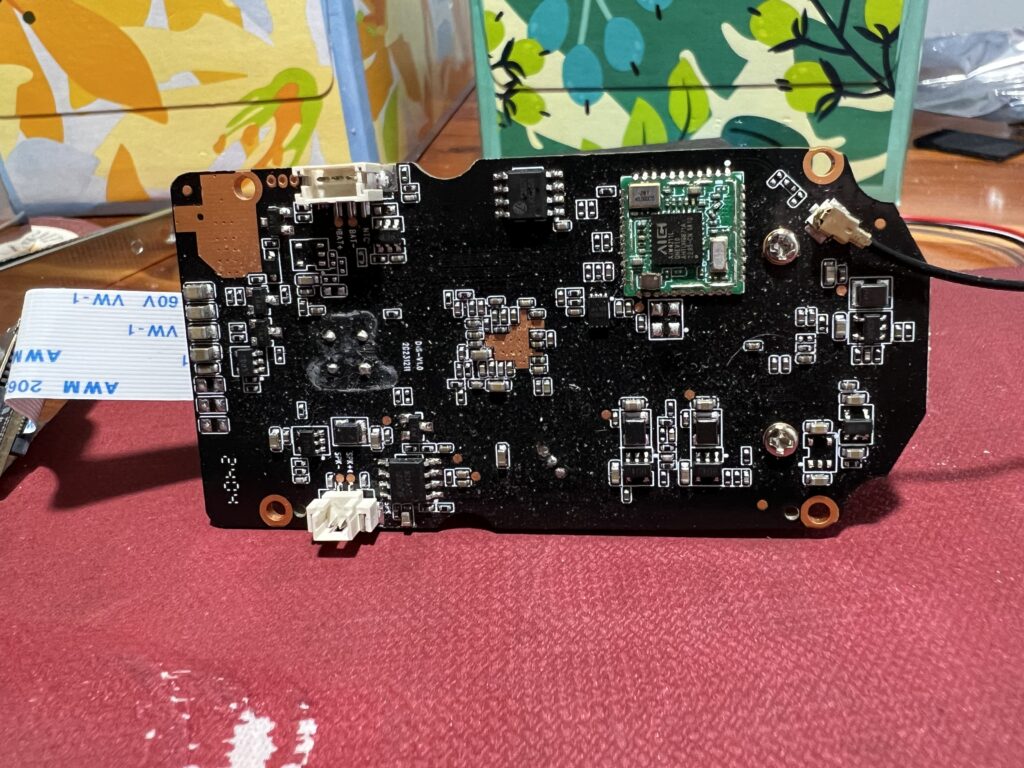
There’s really not too much to this thing. There’s a Goke GK7202V300 SoC, a 64Mb NOR flash chip, a AiW 4211L based WiFi module (which I think is a LB-Link M4211LT1 1T1R or clone), and some support chips like a motor driver for the camera’s shutter/filter, battery charger, and what I think is an audio amplifier for the speaker.
The GK7202 is an ARM Cortex 7A based SoC, which is made for “Smart” video devices. The specs aren’t too bad:
- 900 MHz, Quad core, NEON and hardware accelerated JAVA
- 512MB DDR2 RAM
- Audio/Video processing and encoding capabilities
- UARTs
- JTAG
- GPIO
- and more.
- Full machine translated datasheet (such as is it is) is here.
The WiFi module is a bit behind time times, IMO, but it is a full SoC:
- 32 bit CPU at 160MHz
- 352KB RAM, 288KB ROM, 2MB Flash
- SDIO, SPI. I2C, I2S and UART interfaces
- 802.11 b/g/n on 2.4Ghz only
- WPA/WPA2 only
The datasheet for the module is here. I couldn’t find a datasheet for the AiW 4211L chip itself, but its product page (in Chinese) is here.
Next time, the iPhone app.